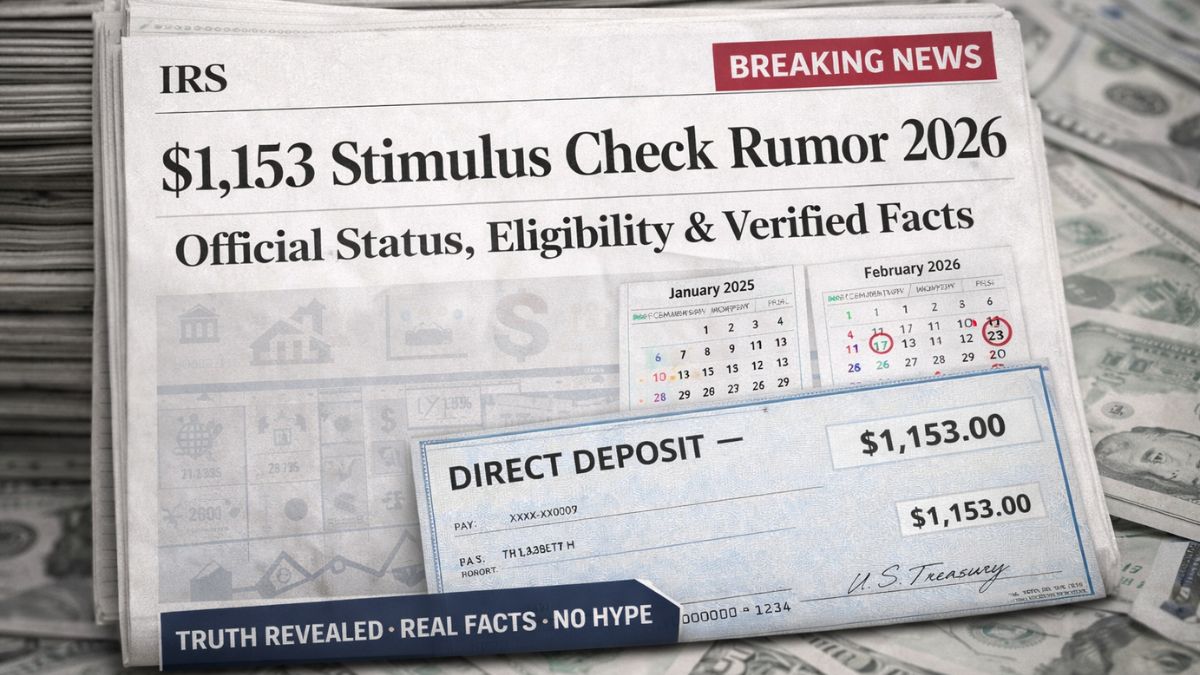
As rumors about a $1,153 stimulus check for Americans in 2026 continue to swirl online, many are left wondering what is true and what is not. Social media posts and online articles have added to the confusion, claiming that a new federal stimulus program is underway. However, it’s crucial to distinguish between fact and fiction. As of March 26, 2026, there is no federal program approving such a payment. This article delves into the details of these claims, the process required for federal stimulus approval, and how Americans can identify reliable information.
Unraveling the Stimulus Check Myth
The notion of a $1,153 stimulus check has captivated social media users, spreading rapidly across platforms. Despite widespread sharing of supposed eligibility criteria and lists of beneficiaries, these claims lack any basis in reality. No legislation has been passed by Congress to authorize such a payment, nor have any relevant federal agencies like the IRS or the Treasury Department issued guidelines regarding it. The reports circulating online are based on misinformation, often misinterpreting other unrelated government financial activities such as state-level rebates or tax refund averages.
The Process Behind Federal Stimulus Payments
To understand why current claims are false, one must know how federal stimulus payments operate. The issuance of any federal stimulus check requires several formal steps. First and foremost, Congress must enact a law specifically authorizing the payment. This involves detailed legislative proceedings where elected officials debate and vote on the proposed financial aid package. Once legislation is approved, funds need to be allocated accordingly. Following this financial commitment, federal agencies then distribute official instructions for payment procedures.

Identifying Misinformation and Reliable Sources
In an era where information spreads at lightning speed through social media and online platforms, distinguishing between trustworthy information and fake news is vital. The figures being cited—such as the $1,153 amount—often originate from misrepresented sources unrelated to any federal initiative. Sometimes these numbers appear in state-level rebate discussions or average tax refunds but are wrongfully presented as federally sanctioned payments. To avoid falling prey to such misinformation, it’s advisable for individuals to rely on official sources like IRS.gov or direct announcements from government entities like the Treasury Department.
What Would Happen If Congress Approved a Stimulus?
Should Congress ever decide to approve another round of stimulus payments in the future, there would be clear steps leading up to its distribution. Typically, eligibility would depend on various factors including income levels, residency status, filing status with the IRS, and existing tax records. It’s crucial to note that any real announcement regarding new stimulus initiatives would be disseminated through official government channels rather than unverified social media posts or emails designed to deceive.
As it stands today on March 26, 2026, no such legislation for a $1,153 stimulus check has been enacted or authorized by any branch of the U.S. government. Americans should remain cautious about engaging with dubious online messages or participating in speculative discussions without verified backing from authoritative sources.

Disclaimer: This article is for informational purposes only and does not provide financial, legal, or tax advice. Federal stimulus programs are subject to Congressional approval and official government notifications.